Updated 17th February 2026
Dr Mark Hyman: 5 foods that lower your chronic disease risk


Share this article


Chronic diseases like heart disease, diabetes, and obesity are killing more people than ever before. Could your diet be the biggest driver of this risk?
Today, Dr Mark Hyman explains why food matters more than genetics for long-term health, and how one diet change can make the biggest difference.
Alongside Professor Tim Spector, Mark, a 15-times New York Times bestselling author and a practising family doctor, explores how modern eating is linked to chronic disease and what the science says reduces risk.
We break down how food is designed to make us eat more, how this affects metabolism, insulin and inflammation, and why this matters more than your genes.
By the end of the episode, you’ll understand the single most important dietary change Mark believes can lower chronic disease risk, based on clinical experience.
If the modern world is driving these conditions, what’s one small change you can make to take back control of your future health?
Unwrap the truth about your food 👉 Get the ZOE app
🌱 Try our new plant based wholefood supplement - Daily 30+
*Naturally high in copper which contributes to normal energy yielding metabolism and the normal function of the immune system
Follow ZOE on Instagram.
Watch the episode here:


We don't buy the hype — and neither should you
Our new app reveals what the food labels won't, using data from the world's largest nutrition study run by ZOE.
Transcript
Disclaimer: While research shows that metabolic interventions can lead to significant remission of symptoms for chronic conditions such as schizophrenia, these remain multifactorial conditions that require professional medical supervision. This podcast is not medical advice; never discontinue medication or alter your treatment plan without consulting your doctor.
Jonathan: Mark, thank you for joining me today.
Mark: My pleasure.
Jonathan: And Tim, thanks for being here too.
Jonathan: So we have a tradition here at Zoe, Mark, where we always start with a quick-fire round of questions from our listeners, where these very strict rules, you can say yes or no, or a whole sentence if we have to. Are chronic conditions like heart disease and diabetes increasing in the West?
Mark: Yes.
Jonathan: Tim. Can lifestyle interventions reduce your risk of these diseases?
Tim: Absolutely.
Jonathan: Mark, are poor food choices to blame for the rising chronic diseases?
Mark: A thousand percent.
Jonathan: Tim, are chronic diseases mostly due to our genes?
Tim: No, that's controversial, but I'll say no.
Mark: Not at all controversial. He's being British.
Jonathan: I like that. So finally, Mark, what's the most common misconception surrounding chronic diseases?
Mark: That they are chronic, that they have to go on forever. Heart disease, diabetes, dementia, metabolic dysfunction, autoimmune diseases, things people think they get and they have to have forever. Mental health issues, bipolar disorder, schizophrenia, depression. These don't have to be chronic. If you understand the root cause and address it, they can be reversed.
Jonathan: That's amazing. So you are saying all these things that are described as chronic meaning you sort of have them forever.
Mark: That's right.
Jonathan: Actually, you can, in many cases, make changes that mean you stop having...
Mark: Absolutely. I've seen it over and over and over again in my practice. I'm a practicing physician. It's not just a theory.
Jonathan: So I absolutely want to get into that. What I'd like to do is just maybe just start with the basics. We just mentioned this word, chronic conditions and chronic diseases. What I'm a bit fuzzy about, like what exactly that means.
Mark: I mean, the main chronic diseases that people suffer from are cardiovascular disease, heart disease, diabetes, type two diabetes. Dementia is increasing. Cancer can be chronic, although it often kills people. Autoimmune diseases, mental health issues like depression. People often have chronic digestive issues, whether it's irritable bowel or reflux, that they think is chronic and permanent.
Mark: There's a whole long list of things that people suffer from that are basically affecting six out of 10 Americans and causing massive amounts of disability dysfunction, loss of life, and quality of life. More importantly, traditional medicine is maybe okay at managing some of the symptoms, but doesn't have a model for getting to the root cause and understanding the drivers of them and how to reverse those conditions.
Jonathan: And so when we use this word chronic, that means once you've got it, you've got it forever?
Mark: Well, yeah. I mean, I learned in medical school that if you have type two diabetes, it's a one-way street. If you have hypertension, it's a one-way street. If you have cardiovascular disease and plaque in the arteries, it's a one-way street. If you had an autoimmune disease, it's a one-way street. While at this conference where we are, I had a woman come up to me who was a patient of mine 20 years ago who had rheumatoid arthritis. It was very severe. She's perfect now. She just wanted to give me a hug, say thank you.
Jonathan: It's lovely.
Mark: But if you were to ask a rheumatologist, is rheumatoid arthritis a hundred percent reversible, they would go, no, because they don't know how to do it. You know, if you go to Aboriginal people in Australia a hundred years ago and say, can you build a rocket ship? They're going to go, no, but it doesn't mean it can't be done.
Jonathan: And so coming back to this question about genes that we had right at the beginning. From your perspective, Mark, are these conditions sort of written in my genes when I'm born and I have to do something very clever to avoid getting this?
Mark: Your genes may predispose you to things, but they don't predestine you to things. And the best example is in America, in the Native American population, the Pima Indians, 150 years ago, they were thin, they were fit. There was no diabetes, no heart disease, no obesity. Now 80% of them have diabetes. By the time they're 30, their life expectancy is 46.
Mark: They're the second most obese population in the world. They were adapted to a different environment. So what determines your outcome of your health is not your genes, but what happens to your genes throughout your life? We call this the exposome, not the genome. The exposome is what your genes are exposed to: what you eat, your activity, movement, exercise, sleep, how you navigate stress, your microbiome, environmental toxins, pretty much anything you can think of that you're exposed to.
Mark: Washing over your DNA and turning on or off genes that regulate chronic disease or create health. So that's really important to understand for people because it means you have agency and that you can change your destiny. Like, oh my, you know, my grandfather's a great example. He, you know, he was deaf, he couldn't hear and so all he could do was manual labor. So he worked the New York Times, he would throw the big, you know, sacks and newspapers onto the truck and his brothers and sisters, and he had about eight of them, all had early heart disease in their fifties and had bypasses and, you know, heart attacks. He didn't start getting it until he was in his seventies and eighties because he was very physically fit and he took a walk every night and he was thin. Right. So even though you might have a predisposition, you can modify your risk by understanding what the risks are and what to do about it.
Jonathan: Now, Tim, as we're listening to this and Mark's talking about in the US, I think you said six out of 10 people are living with chronic conditions. As you think about the rest of the world, is it different?
Tim: No. I mean the UK is pretty much the same. Most of the English-speaking world is the same. The US is leading the way. There's no doubt, the first to change its food system and change a lot of it's society. But the trends in all the other countries are unfortunately going that same way.
Mark: Yeah, we've created the worst diet on the planet and exported it to every country on earth. In China, and I lived in China, I was first visited in 1984. The rate of type two diabetes was one in 150. There was no McDonald's, there was no fast food, there was no KFC, there was nothing. You know, I went back, 20 years later, like just junk food everywhere. And now their rates of type two diabetes are 1 in 10.
Jonathan: 1 in 10.
Mark: Did they genetically change or what happened?
Jonathan: The environment changed. So specifically saying the American food arrived.
Mark: Yeah.
Jonathan: And diabetes went to less than one in a hundred people.
Mark: Yeah. We got iPhones, they got diabetes.
Tim: The success story of, you know, that's why medicine thought it was doing the right thing, is that infectious diseases went down massively.
Mark: Mm.
Tim: So from the 1960s, you know, massive drops in people dying from infectious disease, from dying from pneumonia, gastroenteritis, all this kind of stuff, because we'd had this invasive medicine. But as that dropped, then you saw all these other diseases that didn't exist in underdeveloped countries suddenly coming into play. In a way, some people think those two things are linked.
Mark: Yeah.
Tim: That we're not getting exposed to infections. And actually, that's part of our problem. We've just got weak immune systems, and added to our terrible environment. This is causing this, this real mismatch. And I think this, I read recently that the world now has more people suffering from obesity than from malnutrition.
Mark: A hundred percent. It's about over 2 billion people are overweight or obese versus about 800 million who go to bed hungry. Staggering. We now see globally often the double burden of disease. We see, you know, starvation, obesity plus type two diabetes, all in the same populations. And globally twice as many people die from chronic, preventable lifestyle diseases than die from infectious disease.
Jonathan: It's amazing. Even on a global basis, it's the same story now. That basically something really quite depressing has happened then. Because I do feel like when I was growing up that it felt like there was this wonderful rise in life expectancy and people are saying, well, people are just gonna live more years and more healthy years. It's getting better and better. And it feels like we've had all of these successes.
Tim: And we are better at treating, for example, heart attacks. People survive now who didn't before. So this is, despite all the advances medically, we're losing the battle because more people are coming into the funnel than they can possibly cure. That's right.
Jonathan: And so when we look at like, the number of healthy years that people are having in, you know, the states, for example, or the UK, what does that mean? What's been happening to the number of healthy years over the last...
Mark: The last 20% of people's life is spent with poor health. Their health span doesn't equal their lifespan. Your lifespan is how many years you're alive. Your health span is how many years you're healthy. And that doesn't have to be that way. You can have a health span that equals your lifespan, meaning you live a full life, you enjoy your life right to the end, and then you just have dinner with your family, go to bed and check out.
Tim: And it's the same in the UK. So the UK, we've seen a slight increase in longevity, although it looks like it's going to start dropping, and I think it's already started dropping in the US.
Mark: Yeah. Yeah.
Tim: But the health span has got shorter today.
Jonathan: People are having fewer healthy years than 20 years ago.
Mark: A hundred percent.
Tim: Yeah. Disease-free years are really rare to find in people. All this tech stuff is doing nothing to stop these graphs and these stats.
Jonathan: Why is this happening? Why has there been this huge rise in these non-infectious diseases? And Mark, I know you're just republishing your book Food Fix, which helps us, I think, to understand some of that. What's been going on?
Mark: That's a great question. I realized, sitting in my office, treating patients, that I couldn't cure diabetes in my office. It was cured on the farm, in the food manufacturer's factories, in the grocery store, in the restaurants, and in the kitchen. And I recognized that it was our food system that was making people ill. There's other things like environmental toxins and chronic stress and many other things, but predominantly the driver is food. And the Global Burden of Disease study, which is a big study done in 195 countries, found that food was the number one killer now on the planet. Exceeding smoking.

The crunch your gut’s* been craving.
Support gut health* and energy* and enhance the flavor and crunch of your meals.
Jonathan: Food is the number one killer.
Mark: Mm. 11 million people a year. And I think that's a way underestimate because 75% of the deaths globally are from chronic disease and most of those are from lifestyle modifiable factors. And those are like, smoking is a big one obviously, but it got smoking, obesity and food-related causes are the biggest drivers of chronic illness. And then I begin to say, well, why are we eating this? And then I was like, well, well, it's our food system because it's producing all its high starch, high sugar, ultra-processed foods that everybody's consuming, which is now 60% of the diet in America, it's 67% of kids' diets. It's 73% of what's on the store shelves in the grocery store.
Mark: Why do we have these foods? It's our food policies. It's our policies of agriculture and our food policies that drive the food we have in our environment. And I'm like, well, why do we have the food policies we have? Oh, it's the food companies. The food industry, which is the single biggest industry in the planet, with over $16 trillion a year, employs more people than any other industry. Why? Because everybody eats, right? So they deliberately, maliciously, intentionally have created a food system and co-opted every single sector of society that has anything to do with coming up with a different solution. And they have driven massive efforts to lobbying, which they're aggressively trying to stop what's happening right now in America, with awareness of chronic disease and attempts of change. The food system they co-opt science. There are 12 times as many studies funded by the food industry about nutrition than by independent scientists or the NIH or the National Institute of Health. So if a dairy company does a study on dairy or a soda company does a study on soda, they fund, oh, the soda doesn't cause obesity.
Mark: They fund the professional societies like the American Heart Association, the American Diabetes Association, the American Academy of Pediatrics, Academy of Nutrition and Dietetics. 40% of their budget comes from the food industry. If you go to their conferences, it's just junk food everywhere. If you look at the American Heart Association, $192 million a year comes from the food and pharma industry, $192 million a year. If you look at the front groups, they create these fake groups. The American Council on Science and Health would sound very noble, but if you look at what they are, they're funded by the food industry and the agriculture industry. And then they attack people like me. They have a very deliberate campaign to create misinformation.
Mark: They call up social groups like the NAACP and Hispanic Federation. For example, I was in a movie called Fed Up, which was about childhood obesity, and we wanted to screen it at the King Center, Martin Luther King Center in Atlanta. I met his daughter, Bernice King. She was very excited and I said, great, let's screen it. We had set the date. She called me a few days later, said, we can't show the movie. I'm like, why? She goes, Coca-Cola is in Atlanta. It funds the King Center. And I went to Spelman College, you know, a women's college in Atlanta, a black Women's College. 50% of 18-year-old women entering college have a chronic disease. And everywhere is Coca-Cola. Because Coca-Cola funds a lot of the campus, and if you look at the board, it was the vice chair of such and such from Coca-Cola who's on the board. They literally block every single avenue of good science information. The Land Grant Colleges established by Abraham Lincoln to improve agriculture were funded mostly by the pesticide, herbicide, and fertilizer companies.
Mark: So they don't allow farmers to understand how to do different kinds of agriculture that's more regenerative, that's good for the land. That's good, produces better food, more food that restores the soil, prevents the loss of biodiversity and pollinators, that doesn't pollute the water, and that doesn't use and deplete our aquifers. That, you know, produces more nutrient-dense food that produces more money for the farmers. They don't want anybody to know about that. So there are so many ways in which our whole system has been co-opted by, when I say the food industry, I mean agricultural companies, seed, chemical fertilizer companies, and pesticide and herbicide companies, the processed food industry, and the fast food industry. And it's only a couple of dozen CEOs that control all this.
Jonathan: And Mark, why do they want to do this? Because we buy everything in our lives from big companies that make things for us. And I think we normally think that the idea of capitalism is that these companies are incentivized to make something good for us because we buy the best thing, and therefore they would go and do something better. And you can freely choose to switch. And that this is, you know, something that is good, and you're painting a picture. You said that wor,d I wrote it down. It was sort of like maliciously and intentionally co-opting society.
Mark: Yeah, a hundred percent.
Jonathan: Why?
Mark: Shareholder value. I mean, Denise Morrison was the head of Campbell's and tried to improve Campbell's. She got fired. Indra Nooyi was the head of Pepsi. Tried to improve them, got fired. Mark Schneider, head of Nestlé, tried to move towards regenerative and improving Nestle's food supply, got fired. It's a litany of, you know, dead bodies in this industry. I'll give you an example of a malicious behavior there, a couple. One in California. There was this, a number of years ago, there was a number of cities like Berkeley that started with soda taxes, which was very threatening to the food industry. And then a bunch of other cities started soda taxes. And they work and they work and they improve the lot of the people in those communities because the money is then used to improve those communities, education, and various programs.
Mark: They went to Governor Jerry Brown, and they said, we're putting together a ballot initiative, which they launched, to prohibit any law from being passed in the state of California, unless it was a two-thirds majority. And they were putting millions of dollars behind this campaign to pass the ballot and convince voters to vote for it. It had nothing to do with food. It would've crippled the government of California. And they knew it. So they went to Governor Brown. And there's a picture of all the food industry guys with Governor Jerry Brown, who is the most left kind of progressive governor in America that I think has ever been voted into office. And they said, if you don't stop the soda tax, if you don't put a prohibition against any further soda taxes in California, we're gonna pass this ballot initiative. So he did that. He did that.
Mark: In Washington State, there was a GMO bill to label GMO foods. I mean, I think every country except Syria and the United States labels, including China and Russia, which are not known for transparency. And a number of the big food companies and trade associations got together, including illegally, to put together a campaign to make people vote against this ballot initiative to label GMO Foods. The Attorney General found out about it and then basically sued these companies. They don't care. It was the biggest, I think, settlement ever was like $18 million, which for them is like nothing. And they defeated the GMO labeling law. So there's just story after story after story like this.
Jonathan: And why can they make more money selling us stuff that's really bad for us? It's, I guess, what I'm curious about, yeah. If I compare that with other industries, I feel that...
Mark: I mean, how much profit can you make on a carrot? But if you make a carrot chip and you're frying oil and you sell it in a bag, you can probably make 10x the money. Right. So processed food is very cheap ingredients that are industrially produced at scale, which are funded by the government. I mean, it's so cheap, and that's why we get cheap food, but it's not cheap. Because the price we pay at the checkout counter is not the true cost of the food. Prince Charles, now King Charles, gave a speech about this called The Future of Food. I think it was at George Washington or Georgetown University years ago, and he wrote about this: what is True Cost Accounting. And the Rockefeller Foundation put together a report a number of years ago that there were $3 in collateral damage for every dollar we spent on food. $3. So you spend a dollar on food, but the food industry is not covering those costs; they're passing on to the taxpayer, the citizens, the government, and the environment.
Mark: So chronic disease, the burden of that, who's paying for that? The food industry is not paying for your healthcare bill, right? There's the damage to the environment from the loss of soil, the loss of our aquifers, the loss of biodiversity, the dead zones that are 500 around the world. The one in America, in the Gulf of Mexico, is the size of New Jersey where there's no fish because the fertilizer runoff causes eutrophication, kills everything. So they basically don't pay for that. They don't pay for the social cost of what happens to our kids. Our academic performance in America is frighteningly low. It's such a low standard, like I think we're 30th in the world. And why is that? Because kids are eating crap and they can't focus, they can't think.
Tim: Mental health problems. Yeah. Uh, don't get counted in those figures. Because they say, well that's, you know, physical and mental. We have this weird idea that they're separate and we know they're not. But, in the UK I think they said just the health bill alone was 200 billion of the cost of bad food in a little country like the UK.
Mark: Yeah.
Tim: And that's not counting all the agricultural damage, the environmental stuff and the mental health conditions. Because we are having a mental health epidemic in young people at the moment. Yeah. I dunno what it's like in the US but in the UK so many people are not ever working, they're just going on disability benefit because they're depressed and anxious.
Mark: Yeah.
Tim: And a lot of that is down to diet and terrible food in schools.
Mark: Yeah, and this is so important at what you're saying, Tim, because now at Harvard and Stanford, there are departments of metabolic and nutritional psychiatry, meaning that people who have insulin resistance, which is this phenomenon that you get when you eat a lot of sugar and starch, where you get resistant to the effects of insulin. Insulin is a fat storage hormone. Your body makes more insulin, you store more belly fat, and it's a vicious cycle. You crave more food, and it leads to diabetes, heart disease, cancer, and dementia. Dementia is now called type three diabetes. This whole field is now exploding to understand how nutrition plays a role in mental health.
Mark: And the costs are staggering. There was a macroeconomic analysis that was done a number of years ago, looking at what are the costs over the next 35 years of chronic disease: $95 trillion in direct and indirect costs. And the biggest was mental health. Not because of being hospitalized, but because of the loss of quality of lif,e years lost.
Jonathan: And Tim, I know this is something you study a lot. How do you understand today the way in which all of this sort of cheap food, very industrialized, that Mark's been talking about, actually leads to all the health problems that we've been talking about?
Tim: Well, given that they want to make a profit above all, and they don't care what they put in the food, really, as long as people buy more of it, they aim to get people to eat more of it and pay more for those products. So in doing that, they engineer the food to have properties that make it sort of unnaturally irresistible. So they are super tasty. So they'll combine, um, combinations of salt, fat, and carbs in exactly the right ratio to override your normal instincts and make you overeat it. So that's probably the number one thing. You know, studies show that with the same food, you'll overeat about 25% more of it calorie-wise than you would if it were not with that perfect combination.
Tim: And they'll do anything to make it cheaper. So, like you take out normal milk, which can be expensive in some ways. And so they take that out or make it low-fat, and then they can just use powdered milk, and instead of the fa,t they add in lots of cheap other stuff. All that stuff is starchy maize and things like this, which are also bad for you. There's never any fiber in it because that's expensive to make, and it keeps, retains the nutrients. So it's much cheaper than stripping it off and storing this stuff for years, so it never goes off. And then add in a few cheapest vitamins they can just to get the label right. And you put all that together. And then you've also got the chemicals that they're doing, the artificial sweeteners, the emulsifier, the preservatives, the glues that stick all this fake food together. They are really bad for your gut microbiome. Mm-hmm. And so that gives you a dysfunctional microbiome, which would make you more likely to get diabetes and cause these metabolic problems. So it's not just one thing, it's the whole package, and it's all driven by this endless desire for us to eat more, and they make more money.
Mark: Yeah, I mean, you're so right. Tim, Michael Moss wrote a book called Salt Sugar Fat. It was an investigative journalist from the New York Times and interviewed over 300 industry executive food scientists. And he found that these companies created, um, taste Institutes where they hired craving experts. These are their internal terms to create the bliss point of food to create a quote, heavy users like a drug addict. These foods are biologically addictive. They put even 2-year-old kids in functional MRIs to look at what's going on with their brains when they're shown different images or when they respond to different foods. They are designing these foods to be addictive, and I'm not saying addictive in a metaphorical way. They are biologically addictive. The animal studies are clear on this. There's withdrawal, there's cravings, and the estimate is that there's 14% of the global population that's addicted to these sugars and ultra-processed food, and 14% of kids. No,w 14% of people are alcoholics. So it's about the sam,e except it includes kids.
Jonathan: These companies hire craving experts.
Mark: Experts. Yes.
Tim: Well, they are the best food experts in the world, so they can pay top dollar to get the very best food scientists. That's who we're competing with. They want to create chemicals, mixtures, textures that make it hyper-palatable, as soft as you can, so you can eat it as fast as possible. Before your body has time to feel full, they have this enormous box of tricks, unlimited budget, and they know that, you know, they can keep creating food that humans will just be irresistibly drawn to.
Mark: I mean, you can't eat a kilo of steak, but you could eat a kilo of cookies. Right.
Jonathan: I mean, one of the things that I'm struck by is that the average food in the US is significantly sweeter than even in the UK. And the UK has a big problem with all of this. This is all, again, very different from being in, say, Italy or something. But just all the food has sugar added to it, almost as just a standard expectation of a level of sweetness.
Tim: It's hard to buy a yogurt that doesn't have vanilla in it. Yeah. As a minimum, you know, or artificial sweeteners.
Jonathan: And this comes from like almost just the, is this from the food industry just sort of resetting everybody's taste expectations?
Mark: Yeah. Well, part of it. Expectations, part of it was, you know, it was a long legacy of how we came to believe that fat was the enemy and sugar was fine. And this was a very deliberate effort to kind of vilify fat and to glorify sugar. And that's what happened when, you know, we were told to eat a low-fat diet in the Food Pyramid, 1992. Six to 11 servings of bread, rice, cereal, and pasta a day, and fat sparingly. And that led to the hockey stick of obesity and type two diabetes in America and chronic illness.
Jonathan: That's how I was brought up. You know, this pyramid had lots of potatoes and bread and all the rest of it, and maybe a tiny little bit of plant somewhere on it. Could you explain for a minute, both of you? Why that's bad, because I think lots of listeners will say, well, I understand that adding sugar and this weird Frankenstein food, that sounds bad, but like, what's bad with a potato or eating lots of bread?
Tim: Well, we actually now know, well, we knew 20 years ago, but the guidelines haven't really moved that much. The fact that the advice to eat lots of rice and, um, bread and potatoes is basically just giving you more sugar because most people don't realize they are essentially sugar. They're starches, which is a form of carbohydrate where you store the sugars, but as soon as you cook it or eat it, that sugar is released.
Mark: Turned into glucose.
Tim: And it's exactly the same. People just think, oh, well, I'm not having extra sugar, therefore it's okay. But they don't see that in its stored form. This is all the food. So we've been told in the UK and the US to be eating much more of these, and the perfect healthy plate, you know, had these healthy starches. We always think white rice is healthy, and a nice crusty bread if it looks nice and attractive, that's a healthy food because they look real, you know, they are real, and a lot of the world lives off them. But this was giving us a huge amount of available glucose when we were getting very little fiber and this was stressing our bodies, causing inflammation in the system. And overstressing all these insulin pathways Mark's talking about leading to type two diabetes, insulin resistance, obesity, and all those other complications, as well as the inflammation triggering things like mental health issues because, um, you know, the whole body is stressed, dealing with this constant overload of sugar all the time. And it was just the wrong balance. We weren't meant to be eating that many, uh, that much starch without a balance from the fiber.
Mark: You were so right, Tim. Below the neck, your body can't tell the difference between a bowl of sugar and a bowl of cereal. You might as well just be eating a bowl of sugar, and that's something people don't realize. And we've created an agricultural system that is producing massive amounts and quantities of these refined starches.
Jonathan: I absolutely love that. Below the neck, your body can't tell the difference between a bowl of cereal and a bowl of sugar. Yeah, and I guess that's partly because the sort of cereal that we have, you know, which I totally grew up with...
Mark: Not even, I could say a bowl of rice and a bowl of sugar.
Jonathan: You first published Food Fix in 2020. You're just bringing out an updated version. And I'm just curious, so that's sort of like five years, have things been getting better since that first version?
Mark: Things have, from a health perspective, gotten worse. From an awareness perspective, have gotten better. Whatever your politics, whether you like it or not, the fact that Robert F. Kennedy said, hey, everybody, we got a chronic disease problem. We have to pay attention to this. It wasn't part of the narrative or conversation. No other presidential candidate had ever said this, and I've known many of them, and I've tried to get them to say this and like, no, no, no, we can't say this. And this is a pivotal moment where I think Americans and increasingly the world are realizing that yes, we have a problem. Like we have a problem and we have to face it and deal with it. And what is the solution? We need to figure it out. We need to address the food supply, the food system, the food we grow, how we produce it, how we process it,and what's in it. We need to think about, you know, our guidelines and dietary guidelines and what we're recommending. All these things need to be reconsidered.
Mark: So the policies are complex. I was friends with the congressman, Tim Ryan, and I said, listen, I don't think anybody's looked at all of our nutrition policies and how they affect our health or the economic impact of that. And as a congressman, he could ask the government, what they call the Government Accountability Office, which is basically the watchdog over Congress, to do an analysis of all the policies. And I thought it was bad, but the report came out in July of 21. It said there are over 200 different policies and 21 agencies and departments most working at cross purposes with each other. So, for example, the US dietary guidelines say we should reduce our sugar, added sugar and sugar intake. And yet, with our SNAP program, which is our single biggest food program, a food stamp program, which is I think, up to $125 billion, 10% of that is soda, 75% is junk food, and that includes the soda.
Mark: But 25% is, you know, meat, vegetables, whatever. So the government is paying for the people who are underserved to eat the worst food without any guidelines. And it doesn't have to be that way. They have another program called Women, Infants, and Children. There are strict guidelines on what mothers and infants can buy and purchase with these dollars that they get through this program, but they could apply them. The same thing to the food stamp program. They don't want to because the industry's so powerful and they have all these quote hunger groups like Feeding America now and others, and they are vociferously opposed to any changes in the SNAP program, the food stamp program. And when you look at who is funding those hunger groups, it's the food companies.
Jonathan: That's fascinating because I can see an argument about, like, you know, when you're on low incomes, it's a challenge to look after your family. I find it hard to understand the case that you should be spending it on soda, given that...
Mark: Yeah, no, no, you shouldn't.
Jonathan: This is clearly...
Mark: And then now, and now with this, this movement, and I have a nonprofit called Food Fix Campaign, and working with a woman who, for the last five years, who now is the first lady of West Virginia, her husband's the governor, and they were the first state to ask for a SNAP waiver, which means they asked the USDA, the agricultural department in America, to allow them to prohibit the purchase of certain things on the food stamps like soda. So, now many, many other states have followed suit, and thank God the US Secretary of Agriculture has said, okay, let's see how it goes. So I think we're starting to see a revolution in this, but it's really unconscionable and I am actually planning to do a demonstration very soon on a food stamp budget of what you would get if you were on food stamps, how you can eat a delicious, healthy meal.
Mark: And do this for a week. And show people how to do it, because it's not that it can't be done, it's that people don't know what to do. They don't know how to cook. They don't know what to buy. I mean, you're not gonna buy a $70 regeneratively raised ribeye steak, but there are cheaper cuts of meat. There are cheaper cuts of chicken, and there are cheaper vegetables. I mean, my mother, we were Russian Jews and you know, my mother used to make this soup, which was onions, carrots, cabbage, cheapest vegetables with flanken, we call it flanken, which is short rib, one of the cheapest cuts of meat and cook it with, you know, a little bit of raisins for sweetness and boil it up. And it was delicious. And it's, you know, probably, I don't know, 50 cents a meal. And I make a big pot and I have it for the week.
Mark: So there are many ways to learn how to do this, and I've done this with families who worked in and lived in some of the worst food deserts in America when the family was in Easley, South Carolina. It's part of the movie Fed Up that you can watch on Netflix. And they were a family of five who lived in a trailer. They had a thousand dollars a month for food on disability and food stamps. The father was 42 already, on dialysis for type two diabetes, kidney failure at 40.
Jonathan: 42.
Mark: 42. The mother was, you know, a hundred plus pounds overweight. The 16-year-old son was almost diabetic, and I said, look, let me not give you a lecture, but let's go shopping. I gave him a guide on how to eat well for less. It's called Good Food on a Tight Budget. And it shows you which foods to buy and recipes and things you make. We made Turkey chili. We made, you know, salad from like actual, not iceberg lettuce, but real lettuce and olive oil and vinegar dressing instead of this stuff. And I showed 'em everything that was in their kitchen and in their cupboards. It was all frozen. It was all packaged, it was all canned, it was processed, it was all full of all these ingredients we were talking about. They never cooked anything in their kitchen.
Mark: And I showed 'em how to make a meal. We had this delicious meal together and I said, listen, here's the guide on how to do this. Here's my cookbook. Try this. And a week later, the mother texted me, she said, we lost 18 pounds. I already lost 200 pounds as a family. The father lost 45 pounds, got a new kidney, and the son lost a bunch of weight. The mother lost a hundred pounds. So I get the chills just like telling that story because, you know, it shows that it's not that can't be done, it's that we don't know how to do it.
Mark: The American food industry has disenfranchised people from their kitchens. They've insinuated themselves in every aspect of our lives, and they've done it deliberately on purpose. And Michael Moss talks about this in his book, Salt Sugar Fat, about how General Mills aggregated all the food companies back in the late fifties and sixties because there was a movement to eat better and healthier food. And there was a woman named Betty, who was a home ec teacher, trying to teach how, you know, families, how to cook and do all these things. And they invented Betty Crocker. Now, I dunno if you know what Betty Crocker is in the UK, but it's basically a cookbook that everybody had in the sixties and seventies. And Betty Crocker was a fantasy. She was an imaginary character that they made up. And then they put the recipes: add one can of Campbell's cream of mushroom soup to your casserole, or add one roll of Ritz crackers to your broccoli casserole. All the crap they had in the recipes they were all industrial food. And so they basically created a whole paradigm where, you know, of women's lib and you gotta liberate yourself from the kitchen and the cooking is drudgery. And all this was a deliberate attempt to disrupt the American home, to get women out of the kitchen, to stop having home-cooked meals and to insinuate their products. I mean, everyday life. And I mean, I grew up on TV dinners. Swanson's TV dinners were a big fancy thing. You have a TV dinner and you and heat it up and then you'd kind of, you know, open it up and it was like Salisbury steak and these boiled green beans and it was awful, you know? And yet that's sort of got even worse and worse over the last 50 years.
Jonathan: That's funny. I mean, we've never taken our daughter to a McDonald's, but that somehow hasn't changed. The fact that the idea of going to McDonald's is really exciting for her. Right? So she's picked that up still through like the marketing around her.
Mark: And now these food companies have gotten so smart and now social media and they're insinuating themselves in everywhere. So, Facebook games, all the food companies are all funded by them. These kids see literally billions of ads. The average kid sees, you know, so many ads every day from all sources that if you're a parent, you can't compete by eating your kids. These kids are just being brainwashed, and these companies know how to target these kids. It's like Joe Camel with the cigarettes. They do the same thing with food.
Tim: The cigarette companies bought a lot of the food companies in the 1960s and seventie,s and they know addiction and they know how to keep the money rolling in.
Mark: That's right.

Our new app gives you the power to see beyond the marketing
Make smarter, science-backed food choices in seconds. Scan. Score. Reveal the truth.
Tim: People, anyone listening, it's not just a US phenomenon. The lobbying is exactly the same in the UK. It's in a way less transparent because we don't have to declare things like how much people spend on lobbying and you know, it is not, I mean, I say transparent, it's relatively transparent in the US you can ask for that data and things like this and see which congressman has been taking money from so and so. We don't have that transparency in the UK and we know that lobbying goes on at all levels, particularly anything to change our guidelines. Uh, our national health dietary guidelines do not mention ultra-processed food at all.
Jonathan: Mm-hmm.
Tim: And every two years they meet and say, oh, should we say anything about, oh, evidence is not really that strong, that, you know, heavily processed food is bad for you. Wonder why? Well, you know, a lot of that group of deciding it are also paid by the food industry. Uh, and they also have to also get advice from the food industry before anything gets changed in law. Crazy.
Jonathan: And do we see the same thing also in, in the UK and elsewhere in terms of the taxes? Because I think there's definitely been the same situation across the globe around talking about taxes on like highly processed foods and...
Tim: You know, the English-speaking countries are way behind the rest of the world. So Scandinavian countries and South American countries have started to have rules on, on advertising for children. Packets of cereals aren't allowed cartoon characters, which you can understand is totally the wrong thing to be telling kids. Um, they have black dots on things you should be avoiding, and they have taxes that are showing that you can use tax to reduce just the way, you know, we got cigarette smoking down just by incremental changes in tax. So we know we can do it at least a dozen other countries that are leading the way on this. Uh, some in Asia, Scandinavia, and particularly South America, where they've just seen their economies, you know, absolutely go to shit because everyone's drinking sodas and getting diabetes and they can't afford it.
Mark: Yeah.
Tim: And they've started to make changes and they're having an effect. But in countries like ours, that change is being blocked by the food industry and the lobby.
Mark: It's quite amazing what happened in Chile, which was the first kind of country. Because there was a president who was a pediatrician, a doctor, Michelle Bachelet, and Dr. Picard, who was a vice chair of the Senate in Chile. And they had the reins for a minute, and they're like, okay, we're gonna do it now. They put in 18% soda tax. They restricted food marketing from 6 am to 10 pm for kids. They got rid of all the junk in schools. They got rid of infant formula advertising. They put these stop signs literally with black warnings for salt, sugar or fat and calories on the front of packages. So if you go down there, it says, don't eat this. Basically you're gonna kill you. And it worked. Michael Bloomberg has, you know, spent a lot of money helping support this effort and researching it with Barry Popkin from UNC Chapel Hill. And they have shown that this really works. If the population gets healthier, and if this consumption goes down, the people stop buying it. So we know the policies that can make a difference, but the amount of resistance to those are so massive. I mean, in America you have the First Amendment, which is free speech. You say, well, you can't restrict, you know, advertising, but we have to protect our children. That shouldn't apply to our children.
Tim: And the argument is not valid. Because what, you know, you don't sell vodka and cigarettes to four-year-olds, do you? So...
Mark: No.
Jonathan: And for you both, I think what I'm hearing is like the sort of food products that have been made by these big food companies just shouldn't really be treated like food in a way they should be treated like some... they're drug products that's being created by anybody else.
Jonathan: And so...
Mark: A leisure drug.
Tim: A leisure drug.
Jonathan: If they're, if they are a leisure drug, okay.
Mark: But the problem is the food industry is so good at brainwashing everybody, including the healthcare system, saying it's all about calories in, calories out. It's all about moderation. It's all about exercising more and eating less. Bullshit. It doesn't work. We have to find ways to protect our population and if another country was doing to American kids what we're doing, we'd go to war to protect them. I mean our kids are really struggling. 40% are overweight, 20% are obese. The rates of ADD and behavioral issues are skyrocketing. Depression and suicide is the third leading cause of death in these kids. They did a study I talked about in my book, in a juvenile detention center where they got 'em eating real whole food, and there was a 97% reduction in violent crime in, I mean, violent behavior in the institution, there was a 75% reduction in restraints. There was a hundred percent reduction in suicide, which is the third leading cause of death in that age group. In teenage boys. That's remarkable. Right? And the data's there. Same thing in prisons. If you take prisoners and you feed them healthy food, their violent crime rate goes down dramatically. In prison, if you give 'em... yes, 56% reduction, and if you add a multivitamin, it's an 80% reduction. The data is there. It's not like we have to do more research.
Jonathan: And this comes back to what you were talking about before, about just how strong the links are between this sort of ultra-processed food and mental health.
Mark: Yeah. And the food is all your fault. It's your willpower. You know, they basically shame you to say, well, you're overweight because you can't control yourself. It's just you're lazy and a glutton. Nonsense. When your brain chemistry, your metabolism, your microbiome, your hormones, and your immune system is hijacked by the food that we're eating, you're helpless.
Jonathan: It's all incredibly powerful. I'd love to talk about what a listener could do for themselves. Because you always talked a lot about society-wide forces. What about someone's listening saying, well, wow, you know what? I eat a bunch of those foods because who doesn't? So I'd love to talk about your overarching principles for eating healthily.
Mark: The general consensus among nutrition scientists, except around the margins, is pretty much the same. Eat food. In fact, if you look at the dictionary definition of food, I encourage everybody to, you know, go on ChatGPT or Google or whatever, and ask what is the definition of food? And there are various definitions in different dictionaries, but essentially, it's a substance that supports the growth, nourishment and health of an organism. Well, they are by definition not food. They do the opposite. They actually harm us. So the first thing that people should do is is don't eat ultra-processed food. Don't eat food that's got ingredients you can't pronounce, they're in Latin, that are full of things like high fructose corn syrup and trans fats and additives and colors, because they're generally not gonna be good for you. So eat real food, vegetables, fruit, nuts and seeds, whole grains, beans, you know, animal products. And you know, meat is not bad if you eat, you know, meat in the context of an overall healthy diet. You know, fish, Omega-3 fats. It's not that hard. And the problem is that people just don't know what to do anymore because we've raised a generation of people that don't know how to navigate the kitchen anymore or don't know how to navigate a grocery store, and we need to relearn that so we can actually start to support our health.
Jonathan: Key things you would add on top of what Mark described?
Tim: From a health point of view, think of what food would your gut microbes like to eat? Just, it's a simplistic way of thinking about it, but I think once you do that, it's naturally you. You can get all these foods to fit the right pattern. And the first one is eat a rich diversity of plants, hit your 30 plants a week. The second is to eat the rainbow because brightly colored things rather than beige. Most of the UK and the US population just go for one color and we need to get people thinking that's bad.
Jonathan: There's definitely something about when you're a child and if it's something to do with safety or something, that it's like they quite easily want to give up these things. There's something about the bread and the pasta and things. These are like the things you naturally eat.
Mark: We train them. We train them. What do kids eat in Japan? Raw fish and seaweed. And pickles. It's what you train a kid to eat. You know, it's not because they are naturally eating that. In fact, there's a great book called Nourishment by Fred Provenza. He's one of the most incredible scientists. He's a rangeland ecologist who studied the relationship between the soil and plants and animals and humans and the interactions. And he talks about how animals naturally will go and eat all the different kinds of plants they need. They'll go and seek even medicinal plants that they need to upregulate their health. And there was a study done, I think it was in the twenties or thirties at an orphanage where they took these kids who, you know, had no parents and basically just fed them liver and brain and organs and kidney and all this stuff. And these kids naturally were eating the things that were going to optimize their health. They weren't going for the candy and sugar. They were eating stuff that was because we've lost our natural intuition and our natural nutritional wisdom about what to eat.
Tim: Well, we feed them formula milk, and then they get, you know, these pouches. And so they never have to chew or eat anything. And everything they're seeing that is reassuring is this sort of creamy brownie, sort of soft, gooey color, and they'll carry on the rest of their life in that comfort zone.
Mark: In the US the formula is so bad that the average formula contains the equivalent of a full Coca-Cola soda drink for a baby. So very early on, they're getting hijacked and it's in the form of corn sugar as opposed to lactose, which is what milk is supposed to have in it. And there are formulas now that are using lactose, and there are companies now that are emerging to actually create better quality organic formulas for babies. But that may be part of why we're seeing this raise rates of obesity in kids and why these kids are hijacked very early on.
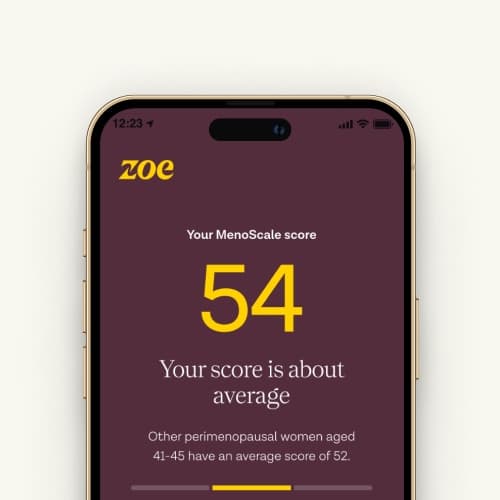
Tim: And the companies, they know this. So, you know, the big companies like Nestle and others that are going into hospitals giving free pouches and formulas sort of dissuade women from breastfeeding and getting them hooked onto this food long term. And this is absolutely the worst excesses of the food industry. And they're setting 'em up for life, so they become addicts. The other thing I'd say is fermented foods. All the studies show that if you get three portions a day, you'll be able to reduce your inflammation by about 25%. You can really improve your gut microbes helps things like mental health, you know, think, and it may be acting a different way to some of the other mechanisms. So it's sort of additive and agreeing on the ultra-processed foods. But I wouldn't cut them all out because that's too drastic. You know, 65% of the US diet is these ultra-processed foods. Some of 'em just have, you know, they're classed as ultra-processed, but they might just have vitamin C in it or something. So I think we need to be a bit more smarter about what we're calling the worst ones. And that's why we've got, you know, our app now that does a risk score and really highlights the 25% of the worst ones to avoid. And I think we should be focusing on the sort of medium-high risk ones first, rather than banning everything.
Jonathan: Because they're not all equally risky.
Tim: It's not all equally risky. There's a huge difference. I mean, you can go to, you know, yeah. You get on an aisle, you know, three peanut butters that look identical, have the same government stickers on it for health and sugar and whatever. But, you know, one will be zero risk, one will be medium, one will be high risk.
Mark: That's right.
Tim: And it's really hard for the consumer to tell that difference. So I think that's a real area. So we need to be fight the clever, you know, companies that are trying to make them all look the same and we need to use things like AI and technology and apps to fight that. And I think that's really important.
Jonathan: And Mark, as you hear Tim talk about the sort of microbiome side and like the 30 plants and the fermented foods, which is obviously like the complete opposite, I guess, of what you've been talking about with these big foods companies. What are your thoughts?
Mark: A hundred percent. I think, you know, you've got as many or more cells of bacteria in your body than you do. You've got a hundred times as much bacterial DNA as your DNA. Basically, they're running this show and they're producing all sorts of metabolites and byproducts that regulate your health in a good or bad way. And they actually can cause diabetes. They can cause inflammation. They can cause autoimmune disease, or they can create health. And we know that what you're feeding them is critical. So you're not just feeding yourself, you're feeding a whole army of bacteria in there that are determining everything about you and including your mental health, your immune health, your metabolic health, and your cardiovascular health. I mean, it's quite astounding, even your cancer risk, all determined by your microbiome. So if you don't understand how to take care of those little critters, your health is gonna suffer.
Mark: And so, yes, fiber, yes. Fermented foods, yogurt, you know, sauerkraut, kimchi, you know, miso, all the stuff that, you know, other countries have been using for centuries that are just part of their natural diet. I mean, there was a study in Poland where women who moved from Poland to the US dramatically increased their risk of breast cancer. In Poland, they eat about 30 pounds of sauerkraut.
Tim: You know, and Kefir as well.
Mark: Yeah. Yeah. So it's like, yes, the microbiome is incredibly important, and it is part of the root cause of why these foods cause such a problem. Many of these foods have emulsifiers, which are now understood to disrupt the lining of the gut that allows bacteria and food proteins to leak in. And your immune system starts reacting to this, and creates inflammation, and all these chronic diseases we talked about at the top of the show, they're all inflammatory diseases. So our bodies are on fire, our metabolism is on fire, our guts are on fire, and our brains are on fire, and heart's on fire, and that's what's causing chronic illness. And a lot of this is coming from the gut microbiome.
Jonathan: Now, one thing we always get asked all the time is, what's Tim's favorite breakfast? But since I've got you here, and you've been talking about this so eloquently, right? What's your go-to breakfast?
Mark: It depends. If I'm home and, you know, I'm working out in the morning, I like protein shakes. I'll often use regeneratively raised goat whey, as whey protein is, as I'm 65. I'm an old guy, and as you ag,e you need more protein to maintain your muscle mass. And so I like to get a good load of protein in the morning. Most people have sugar for breakfast, bagels, cereals, muffins, French toast, and pancakes. It's dessert for breakfast, but it's important to eat protein and fat for breakfast. And so I have a protein shake. I put in some frozen fruit, I put in some creatine. Um, a few other things I use for my microbiome, some probiotics. Uh, I put in Urolithin A, which is actually a postbiotic that comes from pomegranate. If you have a healthy microbiome, which most of us don't, and probably people listening out there, I can't imagine there's anybody out there listening that hasn't taken an antibiotic in their lifetime, and that destroys that. So I basically have that for breakfast if I don't have that. Um, and I'll have an omelet, or I'll have eggs, or I might have a regeneratively raised sausage with eggs, or sometimes I'll have like a sheep yogurt with lots of nuts in it. And that's got a full-fat yogurt with nuts in it.
Tim: Well, I'm here in the US, and people are saying that they won't eat any milk products.
Mark: You know, we have an industrial cow system in America, like we have an industrial meat system or grain system. And these cows are hybridized. They're not genetically modified, but they're bred to be these, you know, hyper milk-producing cows. They're Holsteins, typically. They have a form of casein, which is the milk protein called A1 casein, which is way more inflammatory, causes more gut disruption, more inflammation, more autoimmune disease, type one diabetes and potentially even cancer, versus A2 casein, which comes from goats and sheep and some cows like Guernsey or Jersey cows or more heirloom cows, which are better tolerated. And those are the ones that if you go around the world to these remote places, those are the kind of cows they have. They don't have American dairy, plus they pump them full of growth hormone and other things. They milk them when they're pregnant, so they're full of hormones. There's over 60 different hormones in milk.
Tim: Doesn't sound very appetizing.
Mark: It's nature's perfect food if you're a calf. There was a huge ad campaign in America called, Got Milk, and it was funded by the government and the food and dairy industry that got together this we call a checkup program to promote agricultural products. You had like secretaries of Health and Human Services in them. You had sports athletes in them with the milk mustache and the FTC said, there is no data to support this at all. This is scientifically incorrect. It's not helping your bones, it's not doing all the things you say it is. You've gotta take these ads out and if you wanna learn more about milk, go to the New England Journal of Medicine website, nejm.org and type in Milk and Health. It's an article that was written by David Ludwig and Walter Willett to the top nutrition sciences at Harvard, reviewing all the literature on milk and dairy and showing how harmful it is. In fact, it increases the risk of hip fractures.
Jonathan: And Tim, I know you have a view about like milk versus like fermented milk.
Tim: Yeah, I'm not a fan of milk anymore. I mean, you know, once you're no longer a baby, there's no evidence that it's useful. And overall, I agree with Mark about milk and fractures, and it's vastly overhyped for probably commercial reasons, but once you ferment it, it's a different matter. So, fermentation means you transform it with microbes into something that tastes better, preserves longer, and is better for your health. And so if you look at regular cheese eaters, for example, they always do better in health outcomes than people who don't eat cheese. We're talking about proper cheese. All these ferments seem to have a benefit. So you can convert something like milk into much, so much more interesting by fermenting it. And this has health advantages, can you then perhaps get the advantage of the microbes in the food? But also, you may have broken down some of these proteins into much smaller ones that don't cause that same irritation as well. So in the same way that sourdough bread, uh, cuts down the gluten into smaller bits, so it's less irritating for anyone who's intolerant. So fermentation is a great natural way to make sort of unhealthy food healthier.
Jonathan: So I'd love to leave our audience, maybe who's listening to this and saying, I'd like to make a change. If Mark, if you were gonna say there's like one piece of advice to somebody who could, they could maybe start doing, you know, today who's worrying about this burden of disease, what would it be?
Mark: That's easy. Dramatically cut down on starch and sugar in your diet. Think of it as a recreational drug. If you want to have a tequila on the weekend, great. If you have tequila for breakfast, lunch, and dinner, it's a problem. And we're having this for breakfast, lunch, and dinner. So a treat, not a staple, starch and sugar and in all forms. So it's anything like, unless it's a whole grain, like you know, brown rice or buckwheat or, but you know, beans, I'm talking about any refined grain or sugar in any form. And people say, well, what about honey? What about maple? I'm like, as you know, Shakespeare said, you know, a rose is but a rose. Sugar is sugar by any other name, and there are a hundred names for sugar.
Jonathan: Amazing. I'd like to do a quick summary of what we've covered. Hearing this, it always makes me think about what people must have said about tobacco probably before I was really born who were saying, this is really bad. And there was, this is ridiculous. Like my mom was told to smoke when she was a child. How can this possibly be bad? And so it makes me believe that it's possible to make some shift. But you know, the big thing on my mind is you just sort of said big food is maliciously and intentionally damaging society, including our children. It has people like cravings experts figuring out how to build exactly the most addictive food that you can imagine. And I think you gave me the statistic, maybe like 14% of people are addicted to food, which is just sort of similar to what happens with alcohol, which we know is very dangerous for some people who aren't able to manage it. As a result of this, we started a hundred years ago, massively increasing our health span and lifespan as we dealt with all these infectious diseases.
Jonathan: And now, you know, the last 20% of my life, which is a lot, right, is spent sick, unable to enjoy it. And actually our health spans, it sounds, if I said rightly, in both the US and the UK are actually shrinking.
Mark: Mm-hmm.
Jonathan: I think you said this thing like food is the number one killer globally, which, given that we have to eat it in order to live, there's something deeply wrong about that.
Mark: It's actually technically not food.
Jonathan: And you mentioned that because you said what's food like? Food is something that supports the growth and nourishment of an organism. And so if this is stuff that like actually just hurts us, it doesn't really deserve to be called food. I love that. You also said something which I loved about, you know, if you eat a bowl of rice or a bowl of sugar like below the neck, you can't tell the difference. No. Because you're both explaining just how rapidly this stuff is being turned into sugar and therefore, you know, it's fine. There's a little bit of your diet, but if you're eating that all the time, and I used to think for many, many years that white rice was really healthy and I'd made this great choice, there are some countries that are fighting back, which I think is really interesting. We're all living in this English language environment and I'm struck that you talked about between you both like Scandinavia and Chile, like really having an impact. Whereas I think we're living in this English language bubble and we feel that it's impossible to make any change and then to finish, you talked about what to eat and I think it was really interesting that you not only agreed, I think a lot on the problem, but actually there's a lot of alignment on the solution. So start by eating real food. So you really want to cut out this ultra-processed, this high-risk processed food that is harming you, cutting down the starch and sugars. And I know that includes these sorts of sugary drinks that you talked about so many people buying on low incomes.
Jonathan: And then, like positively, you know, I think we heard Tim 30 plants eat the rainbow, eat fermented food, eat like these real foods that are out there, and allow us, therefore, hopefully to restore. And I think maybe that, you know, finish back to where you beginning this idea, we're not stuck with our genes. It's possible. And if I'm listening to this and I'm 65 years old and I've been eating this diet since I was one. Mark, is it too late to make any changes?
Mark: Hell, no. I mean, quick story. Had a patient atthe Cleveland Clinic, 66 years old. Sure. BMI was 46, which is huge. Huge. 30 is obese and 40 or that is severely obese. She had type two diabetes for 10 years on insulin, and heart failure. She had hypertension. She had multiple stents in her arteries. She grew up all on processed food. We put her in a program with group program. Three days she was off her insulin. Three months she was off all her medication. Her A1C, which was her average blood sugar, went from 11, which is near death to like five and a half, which is normal. Her heart failure reversed, her hypertension normalized, her fatty liver reversed, her kidneys normalized and she lost 116 pounds in a year. So it's possible at any age.