Published 25th June 2026
Daily30 vs psyllium husk: All you need to know


Share this article


Many people looking to increase fiber intake come across both ZOE Daily30 and psyllium husk fiber supplements, such as Metamucil or Fybogel.
While both increase dietary fiber intake, they are very different:
Psyllium husk is a single-source, isolated fiber.
Daily30 is a multi-ingredient gut supplement made from a blend of plants.
Psyllium husk is a concentrated, gel-forming fiber supplement designed to increase fiber intake, regulate bowels, and lower cholesterol.
Daily30 was created by ZOE’s scientists to support your gut microbes, digestion, energy, immunity, and skin and hair.*
Below, we explain how they differ in more detail and how people typically use them.
Is Daily30 better than psyllium husk?
There is no universal “better” option, as they are designed for different uses.
Psyllium husk is a concentrated, single-source soluble fiber, which is commonly used to increase your fiber intake and support bowel regularity.
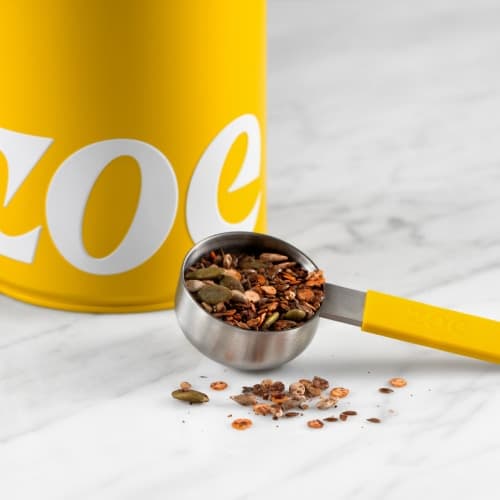
In contrast, ZOE’s Daily30 is a gut supplement made from a blend of more than 30 plant ingredients. This includes seeds, legumes, nuts, herbs, and mushrooms.
It’s designed to help people increase the variety of plants in their diet in a tasty, convenient way.
In simple terms:
Psyllium provides a single, concentrated fiber source.
Daily30 provides a diverse mix of plant-based foods.
Choice depends on personal dietary goals and preferences.


Can I take Daily30 and psyllium together?
For many people, these products can be used together, as they serve different purposes.
Psyllium is typically used to increase fiber intake in a single serving, while Daily30 is used as a food-based way to add a variety of plant ingredients to meals.
When combining fiber sources, it’s important to increase your intake gradually. If your gut isn’t used to dealing with a lot of fiber, it can cause bloating for some people.
Does Daily30 contain psyllium?
No. Daily30 does not contain psyllium husk.
Instead, it contains naturally occurring fiber in a blend of plant foods, such as seeds, nuts, legumes, herbs, mushrooms, and grains.
Daily30 vs Metamucil: What’s the difference?
Metamucil is a psyllium-based fiber supplement containing a single active fiber source.
Metamucil (psyllium husk):
Single ingredient (psyllium fiber).
Forms a gel when mixed with liquid.
Typically used to increase fiber intake.
ZOE Daily30:
Multi-ingredient whole-food blend.
More than 30 plant ingredients.
Designed as a food-based way to increase plant variety.
Can be added to meals such as yogurt, porridge, stews, salads, or soups.
Daily30 vs Fybogel: Which should I choose?
Fybogel is a fiber supplement containing ispaghula husk (psyllium).
Fybogel:
Single fiber source (psyllium).
Expands in liquid to form a gel.
Commonly used to increase fiber intake.
ZOE Daily30:
Blend of multiple plant ingredients.
Designed to add plant variety to everyday meals.
Food-based format rather than a drink-based supplement.
Join our mailing list
Opt in to receive ongoing science and nutrition emails, news and offers from ZOE. You can unsubscribe at any time.
What type of fiber is in Daily30?
Daily30 contains naturally occurring fiber from a range of plant foods, including:
Soluble fiber (from seeds, legumes, and some grains).
Insoluble fiber (from nuts, skins, and whole plant foods).
Because it’s made from plant ingredients, it contains a mixture of fiber types rather than a single isolated fiber.
Is fiber diversity better than a single fiber source?
These approaches to increasing fiber intake are not directly interchangeable.
Single-source fiber (e.g., psyllium):
Provides a consistent, concentrated fiber source.
Commonly used to increase fiber intake in a controlled way.
Diverse plant-based fiber (Daily30):
Provides fiber from a wide range of plant foods.
Supports increasing overall plant variety in the diet.
Both can be part of a balanced diet depending on individual needs.

Comparison table
| Feature | ZOE Daily30 | Psyllium Husk (Metamucil / Fybogel) |
|---|---|---|
| Type of product | Whole-food plant blend | Isolated fiber |
| fiber source | 30+ plant ingredients | Single source (psyllium) |
| fiber type | Mixed natural fiber types | Primarily soluble fiber |
| Format | Sprinkle on food | Mixed with liquid |
| Typical use | Added to meals | Taken as a drink |
| Purpose | Increase plant variety in diet | Increase fiber intake |
The bottom line
Daily30 and psyllium husk are different types of fiber products.
Psyllium is a single-ingredient fiber commonly used to increase fiber intake in a concentrated form.
Daily30 is a multi-ingredient gut supplement designed to help increase plant variety in everyday meals.
The right choice depends on individual dietary preferences and goals.
*Daily30 is a natural source of calcium. Calcium contributes to the normal function of digestive enzymes. Daily30 is also a natural source of copper, which contributes to normal energy-yielding metabolism and the normal function of the immune system. Copper also contributes to normal hair pigmentation and normal skin pigmentation, and to the protection of cells from oxidative stress.