Published 16th April 2026
5 simple nutrition changes to boost energy, lift your mood, and beat fatigue with Prof. Tim Spector and Dr. Federica Amati


Share this article


Watch “The Gut Health Challenge” on YouTube
Can you boost energy, improve focus, and lift your mood in a few days, just by changing what you eat?
In this episode, Prof. Tim Spector and ZOE’s Head Nutritionist, Dr. Federica Amati, break down the simple nutrition changes that help beat fatigue and shift how you feel.
They speak to Lucy and Sarah, who put ZOE to the test and changed only their nutrition for six weeks. At the start, they were held back by brain fog, poor sleep, and constant tiredness. Could a six-week nutritional reset really move the needle?
This episode shows what happened in real life as they explore why many people feel tired or flat, even when tests look “normal.”
The episode explains why your gut microbiome matters, how you can feel better within days, and why consistency beats perfection.
You will also hear the simple changes they made. Bigger breakfasts. More plant diversity. Easy food swaps. Small habits that fit into real life.
If you feel tired but your tests say you’re “fine,” what would you change first? And if you felt better in days, would you keep going for 6 weeks?
Join Prof. Tim Spector behind the scenes, watch the “ZOE Gut Health Challenge” on YouTube.
Jonathan: Lucy and Sarah, thank you for joining me today.
Lucy: Thanks for having us. Yes, thanks for having us.
Jonathan: And Tim and Federica, great to have you with me as well.
Lucy: Excited to be here.
Tim: Yep.
Jonathan: So we always like to kick off our show here at Zoe with a rapid fire set of questions and answers, and we try and have quite a strict rule, which is to say yes or no, or one sentence if you have to. Starting with Tim. Can you transform your health in six weeks just by changing what you eat?
Tim: Maybe that's what we wanna find out.
Jonathan: Is it true that dietary changes can help improve menopause symptoms?
Tim: Yes. I can reveal that.
Jonathan: Federica, do you have to eat perfectly a hundred percent of the time if you want to improve your health?
Federica: No. Consistency over perfection.
Jonathan: Lucy. In your experience can a change in your diet change how you feel?
Lucy: Yes.
Jonathan: And Sarah does starting to eat the Zoe way feel really restrictive?
Sarah: No.
Jonathan: And finally, Lucy, what's the most important thing that you've learned as part of this journey?
Lucy: Addition over restriction.
Jonathan: So I'm really excited to have this conversation. It's the first time I've met Lucy and Sarah, but I'd like to start at the beginning of the story. So we like a challenge here at ZOE and my producer, Rich said that for a lot of people, how we talk about nutrition on the podcast can feel very abstract. So it's like lots of scientists and scientific studies and numbers, but like what does that actually mean to an individual if they go and do this? So he came up with this idea, he said. What if we did an experiment where we put ZOE to the test and we make this real for people who are watching it instead of like very sort of scientific, we recruited three individuals to see if we could improve their health markers only by changing their diet in just six weeks, and then follow their whole journey really closely to actually understand what that feels like and what it means. We've just released the documentary on YouTube, and I'm not a scientist. I wasn't allowed to be involved in any part of this experiment, and I only got to see the documentary yesterday. I'm obviously a bit biased, but I thought it was totally compelling viewing and I'm very excited to have two of the participants, Lucy and Sarah join me today to talk about their experience. So, Lucy, can I start with you? Can you tell us a bit about yourself and what your lifestyle was, you know, before coming into this experiment?
Lucy: Yeah, sure. So before starting ZOE, I was very much in the pub all the time, going to work, coming home, going to bed, because I was just so fatigued, stuck in a bit of a rut really, of just like no energy and no motivation for anything.
Jonathan: And Sarah, same question for you.
Sarah: Well, I was wondering why I was feeling so fatigued and tired all the time because I thought I was eating really well. I hadn't really changed my diet too much. I'm quite active with my job. I'm a physio and a Pilates teacher, and I just kept thinking I should restrict my diet a bit more. I wasn't eating fruit because I thought it was bad sugars, and yes, just not quite doing the right thing.
Jonathan: And were there any specific symptoms or anything like that that you were hoping to tackle through thinking about changing what you eat?
Sarah: I just really wanted to feel better about myself. I was feeling very flat. I wanted to have better sleep because my sleep was being affected and I was obviously perimenopausal and I just really wanted to feel better in myself.
Jonathan: And Lucy, same question to you.
Lucy: I really wanted to improve in similar ways, but my main thing was just having more energy. I just could not keep my eyes open and I was just constantly flat. It felt like no matter how much sleep I had, I was always tired. And I think my mood was always pretty low as well. I was just kind of just stuck in this cycle.
Jonathan: And Sarah, I think you took up this challenge also with your husband. Yes. Rob. Is that right?
Sarah: That's right, yes.
Jonathan: So what motivated you to do this together?
Sarah: Well, both of us had been grumbling, I think, about how we were feeling. My husband was definitely affected by his sleep. He had had a change in his job and we just couldn't really understand what we were doing wrong. Really. We were eating well as well as we thought and just feeling flat and fatigued. And yes, we just thought, wouldn't it be nice to feel better and feel like what we did in our twenties and thirties.
Jonathan: I'm interested in that comment that, you know, you felt you were already eating well because that makes, it sounds like you definitely tried to improve.
Sarah: Yes.
Jonathan: your diet and what you're eating in the past. How had that gone?
Sarah: I've done many different diets, calorie counted like you, Lucy, and restricted my diet. Cut major food groups like fruits and things, thinking that was the right thing to do. Thinking my energy levels were because my blood sugar control was out of whack and I didn't really know what to do. I was feeling a bit desperate, really feeling a little bit low from all these feelings, and I thought I was doing the right thing in terms of my diet.
Jonathan: Lucy, what about you?
Lucy: I was very much reliant on sort of convenience foods because I was in that cycle of exhaustion and no motivation all the time. I would just go past the shop on my way home from work, pick up a microwave meal, have that, and then go to sleep straight away. Or if I wasn't doing convenience, I would really look at calorie counting or cutting out major food groups as well. Think I've been, you know, no carbs, no fats, no this, no that. And then. Because I did that, it was just so inconsistent and my body had no idea what I was eating. And even things like the calorie counting, I'd end up eating just like a pack of super noodles for dinner because I'm like, oh, right, that's, you know, the number is low enough. But actually looking at it, what I'm actually taking in is pretty worthless for my body.
Jonathan: So I'm imagining both of you, you know, have these different stories about why you're doing this, but in both cases you're facing this idea of making quite large scale change to your life, and that I think, can feel quite daunting. Were you feeling nervous about it?
Sarah: I was quite nervous about what my results would show, absolutely and apprehensive on how I was going to maintain these new changes because you've got to stick to it, and I wasn't sure if it was gonna make me feel better at all.
Jonathan: Lucy.
Lucy: I was excited, really, this sort of thing. I like to just kind of jump into and go along with it and see what happens. So I wasn't really nervous in that sense. I do have a track record of starting a new sort of fad and then dropping it very quickly, so that was always at the back of my mind, but I found it so easy to stick to. It always just came naturally, really.
Jonathan: So can I just say both of you, like thank you for sharing your stories so openly. I'm sure that this resonates with a lot of listeners. I'm sure there are many of them who've also felt their life is being turned upside down by menopause. It's something we hear over and over again, people living with really low levels of energy or just not feeling themselves. So I really appreciate it because I think there's something powerful about that for many other people. What I understand is that. After we'd somehow tempted you to take part in this crazy experiment, we said, well, we wanna start by measuring scientifically the state of your health before you actually go into the experiment and change what you're going to eat. And that this included a gut microbiome test and some other sort of standard tests that you might get at the doctors. And Tim, I'd love to bring you in here. Can you explain what the tests were.
Tim: The gut test looks at your microbes, your so-called microbiome with a community of all the bugs there, and we're focusing on the bacteria and we've got thousands of species and we are able to look at the overall gut health, the health of that community by doing our own ZOE score, which is a ratio of the good bugs to the bad bugs. And we all have these in common, so we can compare people that way. And so we want to see how many of the good 50 ones you had compared to how many of the 50 bad ones. And that's how we come up with our overall score. So it's like a sort of blood pressure for your whole body, is the way of thinking about it. And as a baseline that we can then see what progress you can make knowing that that's our fixed level and we wanna see what happens when you intervene. And this is very novel because only recently we published on this study, just last year using 34,000 people to get these scores. So that was the baseline for your gut. And we also looked at these other biomarkers in your blood. Such as looking at the blood fat levels, looking at the levels of inflammation, looking at whether you had any problems in your liver or your kidneys. These general ones as well as your blood sugar, and also how your blood sugar has been doing over the last three months. So you get these sort of standard markers that a lot of people in many countries, maybe not so much in the UK, would have as an annual health checkup. So that's really what we were looking at, and if any intervention was successful, we'd see an improvement in the gut microbes and in some of these key parameters if they were out of balance at the beginning.
Jonathan: Federica. I think we also took some self-reported measures.
Federica: Yes.
Jonathan: On top of these sort of tests.
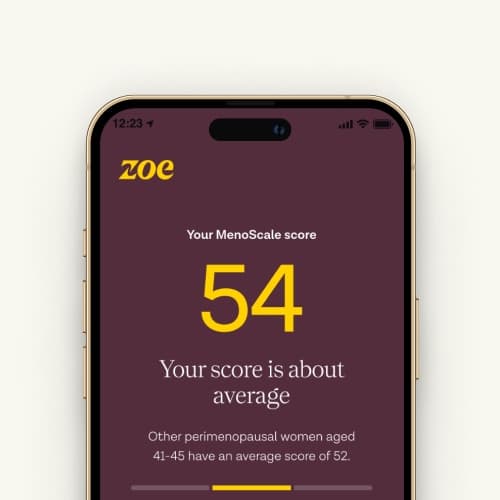
Federica: Yeah. So it's very important to see how people feel when they do these interventions and to understand where your baseline energy was, your baseline mood, sleep, hunger, gut symptoms. In Sarah's case, we also used our menopause scale to understand the severity of perimenopausal symptoms and these self-reported measures are something that really tell us more about how these changes make people feel. Because if you feel better, you're more likely to stick to the change. And so it's really important to listen to people's self-reported measures as well as the blood markers and gut microbiome tests that Tim is talking about.
Jonathan: I suspect most people listening are used to having like blood tests. How common is it to measure how people are feeling?
Federica: It's actually not common enough. So we measure in all our randomized control trials, all our clinical trials at ZOE, but a lot of people don't bother to ask people how they feel. So it's very important to understand how people feel as well as the sort of metrics that we use in science.
Tim: We learned this during COVID. I mean, some people listening might remember those COVID days. And we were asking people how they felt on a daily basis. And that was the first time anyone had really done this on a large scale.
Federica: Yeah.
Tim: And we saw such impressive results that, you know, previously doctors hadn't believed patients telling them anything really. So they're just, you know, silly patients. You know, what do you know, I'm the doctor. We've got the real blood test to tell us the truth.
Sarah: Yeah.
Tim: We learned in COVID that nothing was further from the truth. And actually people doing this every single day got really good at it. And they could tell when they were going into an infection or coming out of it. And so that's where we learned that, you know, mood, energy, hunger were things that we can record and we could use in our studies and our trials. So, and
Federica: it makes sense, right? Like we're a whole person. So the way we feel reflects the way our body's functioning.
Tim: But the other thing is we notice that, you know, from the trials is that these are things that change first.
Federica: Yeah.
Tim: So even before we see most blood changes, we see changes in mood, energy, hunger in a few days in some of our ZOE trials. And so the brain is actually one of the first organs to actually notice what's going on.
Sarah: Yes.
Jonathan: I think it's really interesting how your're feeling hasn't really been seen as a very valid thing because it's not like measured on a blood test. But that is actually sort of obvious, isn't it when you think about it, that it tells you a lot about how your body is actually working.
Tim: Well yeah. But as doctors we also, you know, you say to patients when they come in, oh, how are you feeling? And the British response is, oh, not so bad. Mustn't grumble, which isn't really a useful indicator. Whereas if you actually say on a scale of 1 to 10. How do you rate your mood? How do you rate your energy then that has a huge difference to this rather general how are you
Sarah: Yeah,
Federica: yeah, it's true because it's a subjective measure, but when you ask people in the comfort of their homes when they're being honest with the app, it's very different to what they would say to your face.
Jonathan: So, Sarah, can you remember what your initial tests revealed?
Sarah: My gut biome. I had, you know, a moderate gut biome and all my sort of cholesterol and blood sugars and everything were moderate as well. And yet I still found that I was wondering why I was feeling the way I was feeling.
Jonathan: And what about your husband?
Sarah: He was, I think on an average scale.
Jonathan: Had something about the triglycerides.
Sarah: Oh yes, he did have high, his blood fats were not normal. No. But my cholesterol is high, and that's something that worried me a little bit.
Jonathan: Tim and Federica, what was your view looking at Sarah and Rob's starting point?
Federica: For Rob, I remember thinking that there was a space to improve, especially when we think about heart disease risk. So the cholesterol levels, the triglycerides, so the blood fats. Sarah, your results were more in the average range, a little bit elevated on the cholesterol. But actually what was interesting is what you just said, is that even though it's kind of average, it didn't reflect how she felt. So that objective measure wasn't actually helpful in understanding how Sarah was feeling.
Tim: I remember looking at Rob's data and saying, oh gosh, you know, his liver must be under a fair bit of strain.
Federica: Yeah.
Tim: Struggling to control the levels of blood fats. And we know that when the fats are in your body for too long, they cause inflammation and that has a knock-on effect on things like inflammation in the brain and can lower your mood and energy, etc. So we were slightly more worried about
Federica: Rob
Tim: Rob than you? Yes.
Sarah: At the time
Tim: at the time, yeah. That was definitely the case. Yeah. Neither of you were particularly unhealthy?
Sarah: No.
Tim: So that, it was interesting you saw this mismatch because you know you had average blood levels
Sarah: Yeah.
Tim: for the UK population. Let's be clear. Yeah. There was nothing dramatically bad. And yet you. I know. Pretty terrible.
Sarah: Yeah.
Jonathan: So that's really interesting. So what you're saying is the blood test didn't really suggest that anything wasn't right. But you were feeling all of these symptoms, which I think you were saying felt associated with perimenopause. So you just weren't feeling 15 years ago, it was almost like if you went to the doctor, they'd be saying, well, there's nothing wrong with you.
Sarah: Exactly. That's exactly how I felt. Yes. I couldn't understand why I was having all these strange symptoms. And I thought I was eating quite well. Obviously I was worried about my cholesterol too when I had that checked at the doctors.
Jonathan: Lucy, can you remember what your test showed?
Lucy: My gut test scored about 336, I think, and that is marked as poor, sort of below average. So that was a bit of a, well, to be fair, I can't really say I was shocked because I knew I was eating fairly poorly and I needed to make a change. So it was more affirming than anything like, oh yeah. This is, you know, on paper why I'm feeling like this. I think my biggest issue was my inflammation, higher inflammation rates. So my body was fighting something.
Federica: I remember the inflammation markers for you were higher and being young, it's one of those things that it's good to pick up early and change. I think your cholesterol and your blood sugar was slightly elevated.
Lucy: Yes,
Federica: yes. Apart from the inflammatory markers, the rest was within range and then your gut score. Reflecting that your good microbes weren't getting what they needed.
Tim: They were definitely struggling.
Federica: Yeah.
Tim: Feed me. Feed me.
Jonathan: So overall, to what extent are Lucy and Sarah sort of quite representative of fairly healthy people in a UK or US population?
Tim: Yeah, completely average. You know, one slightly above average, one slightly below average, but not optimal. I mean, that's the big difference. The averages now reflect what actually the population is not saying these are the optimal levels it should be. So some of these ones like inflammation optimal, should be zero. We have an average that says, oh, well, you know, you live in the UK or the US you are, this is a sort of normal level for you and we, and everything's crept up over the last few decades to what normal is.
Federica: I think also it's really reflective of what it means to live in the UK or the US. And have average blood tests have average results, but just not feel great. And one of the things that I think is really important to think about is that you can have okay blood tests and everything looks fine medically, but you are actually not feeling healthy. And as soon as you do feel healthy, you realize that is not how you want to feel.
Jonathan: So we've got your sort of baseline health scores and at this point we had just six weeks to see if you can make changes that support your health and I guess improve how you feel because that's come through really clearly. Normally we say it's best to wait at least 12 weeks before expecting to see changes you could measure with a gut health test, right? So this was pretty nerve wracking, I think for all of us. It's putting a lot of pressure on us to see these results in a very fast period of time
Federica: from some of our randomized control trials, we do see quite impressive results earlier than six weeks. It's tricky, but we do see that within six weeks you can transform people's health, especially when the interventions rely on plants and fiber.
Jonathan: Let's talk a bit about what actually happened as you went into this experiment. And Lucy, maybe I can start with you. What changes did you make right at the beginning and why?
Lucy: I think I got a bit trigger happy at the start with just adding nuts and seeds onto anything I possibly could because the gamification of the app, like you have to, you know, work up to 30 plants a week. I was like, well, I could do 40, I could do 50. So I was like, watch this, and then I was like, really going for it, which was great. It made me feel great, but definitely there was an element of bloating there. Then I sort of calmed it down a bit and I think because I'd been eating well, and that many plants, I naturally made the decisions to eat well. So I think like a really standout moment for me was on one of the days of filming, I was off work and then my girls were gonna come round for a little girly evening. They were going to, they were all getting like kebabs from a kebab van near work, and they asked if I wanted to have one brought to me and I just made this meal for filming and I looked at that and I thought that actually seemed a lot more appealing than the kebab and me before ZOE would never have dreamed of doing that because I think it was like asparagus and tomatoes and stuff. So that was a really standout moment. Yeah.
Jonathan: That's amazing. Federica, why do those changes that Lucy just started to talk about matter?
Federica: Well it's interesting because we did remember when I came to see you Lucy, I'd say make sure you take it easy with the fiber increase. So it's good to be gradual. But what you've just described is this switch. When you start to eat more plants, you feel better. And also your gut microbiome composition does change. And those gut microbes reinforce the desire to eat more of the plants that keep them alive. Because we're essentially just vessels for them to survive. So your desire to eat the asparagus and tomato and chickpea instead of the kebab also reflects that your microbiome composition is changing and your preference for foods that make you feel better is already instilling itself. By that point, by the kebab night, you knew that you were already feeling better the way you were eating. You didn't want to take a step back. And when that switch happens is when you realize that this is how you'd rather continue feeling. So eating this way will power the way you want to feel.
Lucy: Yeah, and that's really interesting. And I think another thing that was really important about this is, although it's very plant focused, it's not like pushing a vegan diet or anything like that because a lot of people ask if I was suddenly vegan or veggie, but you can still eat the sort of animal products as well. Which I was enjoying as well, but it has opened my palate to a lot more foods that I wouldn't have tried before.
Federica: And that's the thing, I think the idea is that we all eat quite a lot of animal products anyway. It's not about cutting them out, but it's about realizing that we're not eating enough plants. So it's just about adding those on
Tim: plants. Any standout new plants you tried?
Lucy: Oh, good question. Really into sweet potato, which I always liked it, but having that with a bit of yogurt and tahini is like a little snack. Oh yeah. Oh, it's amazing.
Federica: So good. That's so versatile.
Jonathan: How many weeks in were you when you were making that description of turning down the kebab that you'd said previously you would've liked? Well, of course I'll have that. That sounds delicious.
Lucy: Yeah. The fateful kebab night, I think that was, I think that was about three weeks in. It was like, it was midway, so it wasn't that long in like the grand scheme of things.
Jonathan: You are sort of saying that already at three weeks you feel like there's some shift in terms of your own tastes?
Lucy: Yeah. Yeah. And honestly, I think I felt the differences in myself in the first week. Like by the end of that seven days, I felt a lot more alert. And I think, yeah, I met my dad, he came to my area after work and we met up and he said that I just seemed a lot more alert and bright and talkative and just less sluggish. So the changes happened really fast.
Sarah: Yes, I felt happy in about three days in much happier.
Jonathan: Three days.
Sarah: Three days. I mean, I was a grumpy mum, and I think my kids will say, you seem happier, and I definitely felt happier. My mood had changed. I was eating more, which I loved, so I was having a bigger breakfast of all the good stuff, and I think that just took me through the day feeling a more balanced sense of calm. My menopausal symptoms just seemed less.
Sarah: I was just happy. The queen of skipping breakfast.
Federica: Yes.
Sarah: I was often having time restricted eating, missing breakfast, rushing off to work, busy, busy. The odd piece of toast sometimes. And then restricting my lunch and then coming home and sort of crashing and being angry mum. And probably eating too much at that time because I was hungry.
Jonathan: So were you worrying that if you start to eat all this big breakfast, then actually you're gonna end up eating too much food and you're gonna put on weight?
Sarah: Yeah, of course. Obviously I did what Federica advised and ate a nice healthy breakfast to start and I just felt much more balanced quickly.
Jonathan: So you are anxious about this as well, it sounds like probably at three days. So Federica's telling you it's all right to eat this big breakfast?
Sarah: Yeah.
Jonathan: There's a bit of anxiety about whether or not.
Sarah: Gaining a middle with the menopause as the Meno belly that we all are sort of suffering from now. I love the fact that I was allowed to eat more and yeah, that's what I've been doing.
Federica: Abundance is
Sarah: key.
Tim: Well, I think the average person in the US and the UK has maybe 12 plants a week, something like that. And we don't get much variety and not much thought given to it. So the idea of moving to 30 plus plants a week means that most people really have to shift a lot of their ideas about what a healthy meal is to this idea of abundance and adding things again, as Lucy said, rather than restriction. And we've come to this idea of the 30 plants plus from our own research that shows that this is the key thing for gut health across all kinds of populations. And if someone's doing that, we've found that essentially. They don't have to count their amount of fiber. They're getting, it's like naturally you're gonna get it there. You don't have to really worry too much about your polyphenols, your vitamins, your nutrients, these other things that people worry about and take supplements for. So it sort of covers all the bases and that's why it's pretty much foundational to our thinking.
Jonathan: Talk me through maybe a little bit after that first few days there. It sounds like the first big change was just you started eating some breakfast.
Sarah: Yes. Some proper breakfast.
Jonathan: Which is very interesting, right? Because there's a little debate about whether you have breakfast or not. And it sounds like in your case that alone was making a difference. What was guiding you on how to make the changes? Because you'd met obviously Tim and Federica. Yes. And had given you some ideas. Were you then like left on your own to figure this out for the next six weeks?
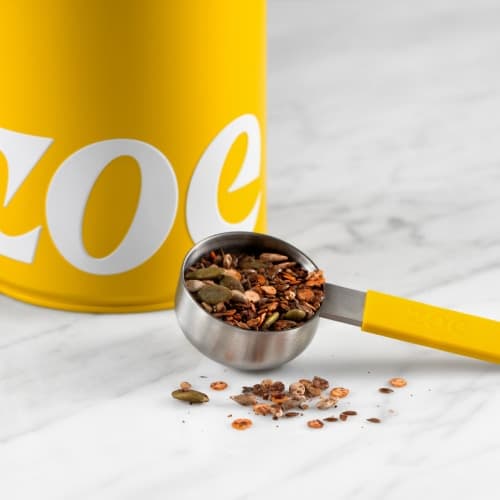
Sarah: Well, there was lots of ideas on the app as well. There's lots of recipes on there, and you can go around the supermarket and zap with your app to find out whether things are healthy or not, whether you should be putting them in your basket and taking them home to eat. But just the advice of eating more fiber, eating more plants and adding to your meals. That was really helpful for me. The Daily 30 was great. I loved it. I still do and add it to every meal I have and so do my kids and so does Rob. For me, the Daily 30 was such a simple way of making sure you had 30 plants a day with your first breakfast meal. So adding that was just a simple thing to do and delicious as well. So I really enjoy using Daily 30.
Lucy: Yeah, daily 30 is such a really easy and simple addition. I think you can add it to anything really, even like sweet dishes, savory dishes. The blend of ingredients like really just gel well with whatever you're doing. So I think my favorite one at the moment is just smashing a avocado. We obviously got peeling it and preparing it, not just,
Jonathan: we appreciate that clarification.
Lucy: Smashed avocado, scoop of daily 30, bit of garlic powder, a little bit of crushed chili, and then just putting that on like some sourdough toast. Really quick and easy. Yeah, and lovely, really satisfying
Sarah: olive oil, squeeze of lemon.
Lucy: of course.
Sarah: Love it. I sneak it in my kids' food as well. You know, Dylan's not quite so favorable, but he doesn't know sometimes I've just put it in. It's great for kids to
Federica: add to kids' diets. It brings variety and fiber.
Jonathan: It actually makes me think about this challenge of improving the diet of your family if they're not as into it and you know, so it sounds like Rob, your husband was into this at the beginning. Yeah. But one of the things that we hear very often is like, I want to do this, but like my partner or my kids or whatever, like are against it. Do you have any tips for trying to make this possible and to deal with that?
Sarah: Well, I think just make small changes from the start. You know, just start adding more to the plate, eating the rainbow. Start slowly, but you can very easily and quickly change a dish from being quite plain and boring to being actually really tasty with the daily 30 and with more plants and more interesting vegetables.
Federica: I love what you said about their curiosity about what you are eating as well. Yeah. So the fact that actually you might make them their favorite, but they were curious about what was on your plate. And that's often a really good way to help kids become curious and accept new foods. So you're modeling the behavior of healthy eating, which they then will take on themselves.
Sarah: And Dylan started cooking a bit more as well.
Jonathan: I know, I love that. It's really interesting and it's lovely to hear sort of like the positivity about it. What did you change in your diet? Because I think one of the things that we hear all the time is maybe two things. First, it's like anxiety about changing your diet because we are all creatures of habit, right? Yes. And we are used to this thing and the idea of going to something else is scary. Your friends Lucy talk about, well, does that mean you're a vegan now? You know, that all sounds scary. But the other part we hear very often is like, well, I could make a change, but you know, my family won't be willing to eat any of this. So, you know, it's almost impossible. I'd love to hear both of you the experience a bit more about like, so what were you changing? What was easy? And also, let's be honest, were there some things you tried that you just hated?
Sarah: Well, interestingly, my husband was saying that he's always been a meat person, and I was looking at some recipes in a book that were obviously just plant-based, and he was like, that's not gonna fill me up. And of course it was full of chickpeas, full of beans, and he thought it was delicious and we've had that recipe on repeat since.
Jonathan: That's so funny.
Federica: And it filled him up?
Sarah: It did fill him up exactly. And I've always been able to drop meat, but he is definitely, and my son would never have done that before. And they are now.
Jonathan: Were you cooking a lot at home before?
Sarah: I'm not a natural cook, but I have really tried to up my game cooking from scratch rather than just picking up convenient food, which some days I'm good. Some days, you know, on a busy work day, I just have to plan ahead a little bit more, I'd say. But I just want my kids to be eating good, healthy food rather than all of this processed stuff that's out there.
Jonathan: And how have they responded to this?
Sarah: Very well actually they've, because they've seen us being in happier moods, they've actually been sort of, what are you eating, mum? I mean, they've not eaten everything we've eaten. Sometimes I have to cook them something separate. But no, they've enjoyed it.
Jonathan: And so Lucy, what was your experience in terms of like changing what you're eating? What was easy and you liked what was hard?
Lucy: Yeah, sure. So I made a lot of swaps. So whole grain pasta instead of white pasta. Sort of simple bits like that. I don't reach for red meat anymore, especially, no sort of processed meats, either. I eat a lot more fish seafood as well, and I've really enjoyed that. I've tried a couple of bits that I didn't like. I'm still not really sold on sauerkraut or artichokes. I don't get, I just don't,
Sarah: oh, I love artichokes.
Lucy: I don't get it. It's just a bit of a like, I don't know, funny consistency, not wood, wood. But pretty much everything else I've had, I've really, really enjoyed and I really love cooking. It's like a bit of me time. Put on some music or a podcast and cook. So I think finding these new recipes were something that could be a nice different thing to do. A nice bit of like mental enrichment for me almost, where, you know, to break the cycle of going to work, coming home, going to bed, like a nice little activity to do with myself is just cooking that nice meal. So I found that really lovely.
Federica: I love that. It's so important to make time. It's such a big investment in our health to eat well, so I think it's really great that you found that. It's good for your mental health as well to slow down and just cook something for yourself.
Lucy: Yeah. It's almost like a hobby, really. Like, well, hobby paired with life.
Sarah: Yes.
Tim: Now a lot of people say that just the act of cooking
Sarah: Yeah.
Tim: is like a sort of meditation or a yoga. Very much so.
Sarah: Yeah. For me it was getting the family to sit down and have a meal because my kids are now teenagers, they're off in their rooms and it was a time to bring them all together and sit and chat, which I've really enjoyed.
Federica: So important for food culture and for satiety. You are more likely to feel satisfied after a meal if you've gone through the process of preparing the food, sitting down and eating it. So it's a really important part of how our body prepares for and responds to food.
Jonathan: That's amazing because it sort of knows that actually the food is coming.
Federica: Yes, exactly. So we have an initial satiety response from seeing, smelling and interacting with our food before we've even eaten it.
Tim: Which you don't get with an instant microwave meal. No, because it's popping.
Federica: Or a packet. Right.
Sarah: And I've tried to eat more mindfully as well because of the app telling me I should be doing that. Every time you snap your meal with the app, it tells you to eat mindfully, eating more slowly, enjoying it, smelling it, looking at it, taking all, you know, using all your senses to eat the dish rather than just distractedly looking at your phone and eating it without any thought. And I practice a bit of mindfulness at the end of my Pilates classes, so it should be something I do. But I've often been eating on the move, which I know is really bad.
Jonathan: Any thoughts on that, Lucy?
Lucy: It is something that I do need to practice a lot more. I have, I've been mindful in the sense of choosing what I'm eating wisely. And I suppose that's like half of the point. Yeah, it's half of it. Yeah. But I feel like, I dunno, my brain just goes a million miles a second. So I'm always kind of reaching and just doing other things whilst eating as well. So I think that's the next step now. Now I've actually got what I'm putting into my body is good. Maybe let's just slow down with everything else.
Federica: But it does sound like you're preparing your food. Yeah. So that in itself is much more mindful than just grabbing something ready and eating that on the go.
Jonathan: We already touched a little bit on plants, as being a core part of sort of what you are changing. So at the beginning, did 30 different plants in a week sound like a rather high mountain to climb in after all this very short period of time?
Lucy: Yeah. It sounded ridiculous at the start, like honestly absurd because my diet was pretty much beige before beige convenience.
Jonathan: What was the reality? Was it very hard?
Lucy: No, no, not at all. And I just thought that by eating healthy you had to cut a load of stuff out and have tiny portions and all. I don't even know what I thought. It was just such a big mental block because it just sounded so alien to me because it's just not what I was used to. But as soon as I realized, you know, you can make a few substitutes just changing whole wheat pasta from white pasta, and then you can just add a scoop of the daily 30. Or even if you didn't have that, just add a scoop of seeds or mixed nuts. There's so many easy little switches you can make or just little additions to really boost the meal.
Jonathan: How about you, Sarah?
Sarah: Yes. I mean, I didn't eat a lot of fruit and so I've obviously increased that. I did eat a lot of vegetables. I like vegetables and I knew they were good for me, but I'd have one or two vegetables with my main meal. Now I try and make that three or four or five if I can, and like you adding more herbs and spices and seeds to everything, which is such an easy thing to do. And definitely makes a salad for example much more exciting, if it's got added extras in it.
Lucy: And yeah, I think as well because that number of 30, it seems so high, but I realized I wasn't thinking about the seasonings as well.
Sarah: Yes.
Lucy: So yeah, all the mixed herbs and I don't know, chili, crushed chilies, things like that, that counts as well. So it's not 30 whole plants, it's just even adding bits of it still counts.
Sarah: I experimented with a fermented food. That's been fun as well. I've enjoyed that because that wasn't something I used to eat before.
Tim: Are you okay with sauerkraut?
Sarah: I like sauerkraut. I like pickles, so I like sauerkraut. I've had to find a dairy free kefir because I don't have dairy in my life. But yeah, no, I like anything pickled.
Tim: And the coconut kefir you found?
Sarah: Yeah. Delicious.
Jonathan: I'd love to come back to the point about restriction, Lucy, that you brought up right at the beginning, because I think that's totally how I thought about eating healthily. Before I met Tim, which is almost a decade ago now. What were you worried about going in, and then what was the reality once you started to do this?
Lucy: I think restriction and calorie counting and things like that, it's always a bit of a worry for me. And then I just automatically associate healthy eating with restriction or calorie counting. And I do worry that it's a little bit of a slippery slope to some bad thought patterns and, you know, unhealthy stuff that I could be very easily to fall down into. But the fact that there's none of that at all was just so helpful in this. And then when you log your food, it does automatically log like how many calories there are, grams of fat, fiber, all those sort of numbers. When I do actually look at the end of the day at my meal, it does tend to be like a really decent number anyway that I naturally eat. I know that the foods that I have eaten, the calories have all been nutritionally worth my time basically.
Sarah: I've loved being able to eat more, definitely, and knowing that each plate with all the added extras provides a lot more for my body, a lot more nutrition. So I've really enjoyed that and not worrying about calories in and calories out.
Jonathan: Did either of you have any moments when you sort of slipped back into old habits?
Sarah: Of course. Yeah. Yeah. So often when I work, I, if I don't prepare and I'm on the move, I find it really hard to get a decent lunch or a decent snack from being out and about and supermarkets around. So I have to try and make sure I take my things with me. And then also when you are eating out
Jonathan: and what, for you, what is slipping into old habits?
Sarah: Well, picking up a packet of crisps, you know, and just eating them on the go because I feel I need some salt and need a boost or a chocolate bar or something like that.
Tim: I've always said some crisps are good.
Sarah: Oh no. I like crisps. I do.
Jonathan: I like crisps. You want Tim with you all the time. He's very positive about all of this. How do you handle that? Because I think one of the things that we see really often is there's such a psychological component to trying to change how you eat.
Sarah: Yeah.
Jonathan: And we're all very tough on ourselves. Right. And so then the sort of like, well, as soon as I've done something wrong, I've failed completely, so I should just give up. And then I'm just gonna eat the worst things almost as a way to punish myself. How do you manage like this in the real life you're describing, you know, very busy working. Kids, all the rest of it.
Sarah: Well, I think that's what's quite good about the app because you can see if you've had a bad day and you often feel like what you can see on the numbers, but then the next day is a new day, right? And you just start off well and just try and eat better and get back on the ZOE way of eating. So I think, you know, it's just important not to feel too bad about having a bad day here and there and eating and enjoying meals out.
Jonathan: And so was the app a useful and important part of the experiment for you?
Sarah: Yeah. Yeah, because it makes you track every day and makes you think about what you're putting in your body every day.
Jonathan: And Lucy, I think this was recorded over the Christmas period. Part of this wasn't it, which is a time of year when I think we all think about basically throwing all of our eating habits out of the window and eating food constantly that you would eat very rarely the rest of the time. Did that make things more difficult?
Lucy: Oh yeah. It was a very cruel time to make us do this. I think for Christmas Day, Boxing Day was almost a bit of a write off. Obviously I'm not gonna say no to the pigs in blankets, the Turkey, the roasted veg and stuff. Well, it was still veg, but lots of like nibbles and crispy bits all through the day. So it was just constantly eating and then going down the pub as well, which is a very fond pastime. Of course I did that to celebrate with my family and, you know, see friends and stuff, but what was really interesting is, so I had a few days off and then by the end of those few days, I really felt the effects of all that sort of unfavorable food and the alcohol. I just felt so sluggish.
Jonathan: I'm really interested, Tim and Federica listening to all of this and a lot also about the perfection required and challenges, like looking at this from the scientific perspective. What are you thinking?
Federica: Do you know? It's exactly why we have things like the diet score in the app because it's not about individual meals or individual days, it's about the consistency over the week, the month. That's what builds your diet. Diet quality isn't made by one meal. And so actually, exactly as Sarah and Lucy have said, having one day when you are shoveling crisps down the high street and then drinking a sugary coffee is just not going to be a problem if the rest of the time, and most of the time, about 80% of the time, you are making choices that are helpful for your body and that are nourishing your body. And Lucy, what you touched on, I mean, it's so important to take part in social gatherings. It's harmful to cut yourself out of social gatherings for the perfect diet. So exactly as you described, you enjoy that, even if it's not the healthiest diet that there is. Enjoy the social aspect and then return to your diet that makes you feel good as soon as you can. And then, you know, later down the line, you might start bringing some dishes to your family Christmas that will make them a little bit healthier. But it's all about balance and it's all about remembering that it's about consistency, not perfection.
Tim: No, just really to mirror that and that the science does show that once you build up a really healthy gut microbiome, you can actually afford to have the odd day off or junk food excursion, your body will cope much better
Federica: Yeah.
Tim: than when you've got a very unstable, unhealthy gut microbiome when it will set you back several days. If you're gonna have a normal, healthy life, and as Federica said, you know, family events, social is absolute true to longevity and good mental health as well. So you don't wanna sacrifice that.
Jonathan: One of the things that we talk a lot about is that it's not relevant changing what you eat unless actually you can sustain that for years. But that sounds really hard. So I guess, you know, there's a lot of positivity here, but sort of how sustainable do you feel these changes,
Sarah: well for me, really sustainable because it doesn't really feel like a restrictive diet. It just feels like a way of eating and just being able to go into the supermarket and pick out lots of different colors of fruit and vegetable and just add them all in. And as you said, not worrying too much if you're out and about and with friends just enjoying that too. So it does, it feels very sustainable for me because I can feel the effects in a positive way. I do like to snack like lots of us do, but I know the healthy snacks to eat and try to get my kids to eat as well. And just adding more plants, more fiber to our meals in the evenings. Yeah. It's not that difficult.
Lucy: Yeah, I really relate to that. I mean, I've kind of put it to the test a bit where recently this week I've moved across the country, so I've been going backwards and forwards, collecting keys, job interviews, et cetera. So for those few days, and then sort of moving, when it was all chaos, we did have some convenience meals and then I bounced straight back. Like my fridge is all full of like all the different colors, like you said, Sarah, big. And yeah, just really, really good foods now. So it is something that I naturally reach into still, and yeah, it's just a really fun, nice way of eating.
Jonathan: How do you think about this, Lucy? Because one of the things I think about actually isn't just like my immediate family, but also how I think about my parents eat and my extended family and their kids. Like, as you become more aware of just what a big impact that has on you, I at least find that I care a lot more about trying to convince the people I love to make these changes, but it's not always easy.
Lucy: Yeah, it's not. I mean, I went, so when I did go and stay with my family over the Christmas period, they were very aware of the journey I was going on and I had to, you know, be fairly good for most of the time. So my dad was very, you know, very on board. So I showed him a sort of, I can't remember what we had, but it was just, I think it was some quinoa, tomatoes, just various bits and a bit of salmon and it's not something that he would've usually gone for, but he really enjoyed it, I think. 'cause it was like the novelty of it as well. Also like my close friends, some of them are in the trap of calorie counting, so like we'll be at work and then we'll choose what to have for lunch and then they'll say, oh, I've only got 200 calories that I can have for lunch. Or they would eat a little bit over and then, oh, we have to go for a big walk now so I can eat more for dinner. And I'm like, just stop doing that.
Sarah: Yeah.
Jonathan: I love that. And what I'm thinking now is, you know, there'll be lots of people listening to this who've been on this journey for a long time, but lots of people who haven't and haven't started out. And so imagine you had a time machine, you go back in time six months ago. What's the one bit of advice you'd really liked to have given yourself back then?
Lucy: Convenience isn't everything. Like even though that meal you're having only took four minutes to prepare it, it doesn't mean it's gonna do you any good in the future. You're gonna feel tired, you're gonna feel sluggish, and if you just put that little bit of time and effort into actually preparing a decent meal, it will just pay off so much better going forward.
Sarah: I would've just actually been quite cross with myself six months ago. You know, if I could have spoken to myself six months ago, just saying, you're clearly doing this wrong. You know, and it's not that difficult. You just have to eat better. Eat more of the good stuff and you will feel the results.
Jonathan: I love that. So I think now the million dollar question is, did it work? Was just six weeks enough time to deliver measurable benefits we talked about in terms of how you feel, but we also talked about in terms of these tests that, you know, doctors believe in and shows you whether or not we've had those changes however. If you wanna find out whether our experiment worked, you need to watch the documentary now, and the link is in the show notes. I loved it. I know you'll love it. I think you'll be really excited having listened to Lucy and Sarah today at the end of this experiment, to meet them at the very beginning of this journey and to discover whether or not it succeeded. If you enjoyed this episode with Lucy and Sarah, I know you will love watching the documentary.